University of Virginia Montessori Science Lab | Trust for Learning
Trust for Learning sat down with Dr. Angeline Lillard for a Q&A about her landmark new Montessori study showing strong outcomes by the end of Kindergarten.
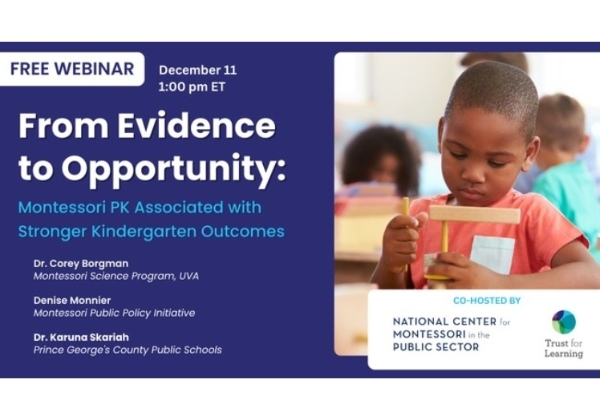
The first national randomized controlled trial of its kind, published in the highly regarded Proceedings of the National Academy of Sciences, showed that public Montessori programs strengthen early learning outcomes–at sharply lower costs compared to traditional preschool. By the end of Kindergarten, children who won a random lottery to attend public Montessori preschools outperformed their peers in reading, executive function, and social understanding.
In this lively conversation, Dr. Lillard shares key insights from the research, and dives into what makes Montessori–and all high-quality, ideal learning environments–so effective, and how districts can apply these findings to strengthen early learning for all children.
Biggest takeaways from the conversation:
In a large, national lottery study, Public Montessori Pre-K children outperformed their peers in reading, executive function, shot-term memory, and social understanding.
Lower income children were particularly strongly impacted.
The Montessori programs – amortizing the teacher training and the cost of the materials over their expected lifespan – cost about $13,000 less per child across three years compared to the non-Montessori programs.
The study didn’t start showing better outcomes until the Kindergarten year – the opposite of the dreaded fade-out effects seen in other studies of public Pre-K.
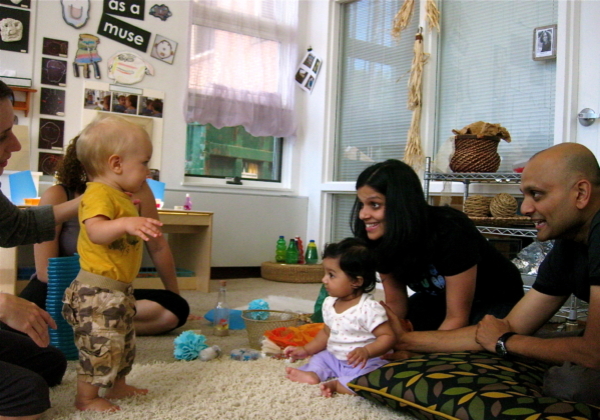
In a Montessori classroom, children benefit from higher ratios and fewer adults in the room, thanks to mixed-age groups, three-year classroom continuity, and the specialized preparation of Montessori teachers.
Angeline and Ellen reflect on the depth and value of Montessori teacher training, which may cost more up front, but may be more sustainable. They also comment on the value of a coherent approach in which the child’s experience and materials are seamlessly linked to the adult development approach supporting them in the classroom.