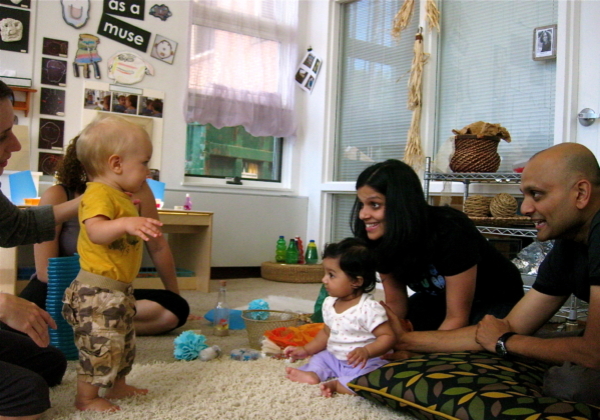
Principles of Ideal Learning
Drawn from the strength of world-renowned early childhood approaches including Montessori, Reggio Emilia, Friends Center for Children, Tools of the…
Report

In this video, visit the Friends Center for Children in New Haven, CT, where educators are bringing nine key principles of ideal learning environments to life. These principles serve as a north star for early educators and policymakers seeking to support optimal development in children prenatal to age eight.

In 2019, a group of ideal learning Head Start providers came together as the Ideal Learning Head Start Network with the support of our staff. The group shares best practices, maintains a resource library for Head Start programs who want to adopt an ideal learning-aligned program, and hopes to support federal Head Start rules that allow for more rapid growth of ideal learning models leveraging Head Start funding. Learn more and join the Network!

Ideal Learning Environments for Young Children highlights recent developmental, neuroscience, and implementation research aligned with nine principles of high-quality early childhood learning environments.

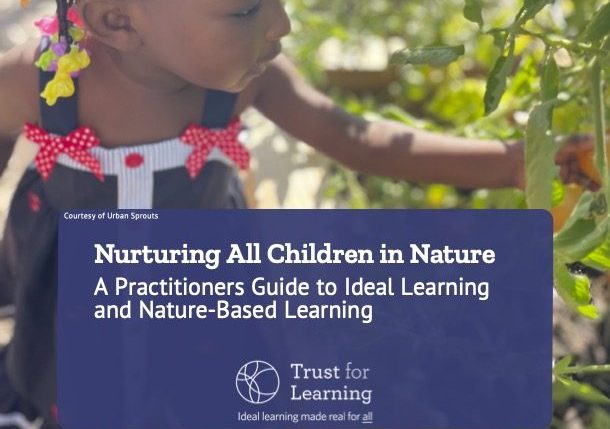
A comprehensive guide for educators on integrating nature-based learning into early childhood education, inspired by the “Nurturing All Children in Nature: Ideal Learning in the Natural World” brief.
How do you know if your child care program is an ideal learning environment? Look for nine key principles of high-quality early childhood programs, including the importance of play, relationships, equity, the environment, and more.

No matter your child’s age or early childhood program, you can bring the Principles of Ideal Learning to life at home. Here are resources from members of the Ideal Learning Roundtable that can help you build playful, relational learning into your daily routine.

Ideal learning is where early childhood equity and quality meet. Learn more about how educators from around the country are expanding developmental, whole-child environments for all children.

New Haven Children’s Ideal Learning District (NH ChILD) was conceived by the Ideal Learning Roundtable as a place-based demonstration district, where community leaders come together to make ideal learning environments real for all children, birth through age 8. In New Haven, community leaders are tackling issues of access, quality, and equity and sharing what they learn as they work toward this ambitious goal.

While the local, state, and federal policy landscape is complex, policy and regulatory changes related to assessment, class size, curricular standards, funding, and educator training can expand or impede ideal learning environments in the public sector.

Trust for Learning regularly shares new funding opportunities, resources, and research with the field. Please join our newsletter to stay in the loop!