Toscha Blalock
Chief Learning & Evaluation Officer | Co-Director Trust for Learning Havertown, PA
Expert

The report, “Early Relational Health: Building Foundations for Child, Family, and Community Well-Being”, is extensive and weaves insights from indigenous cultures with modern neuroscience to synthesize the irrefutable evidence that relationships are the biological foundation of development. You can read a four-page summary of the report by clicking on the “download” button to the left.
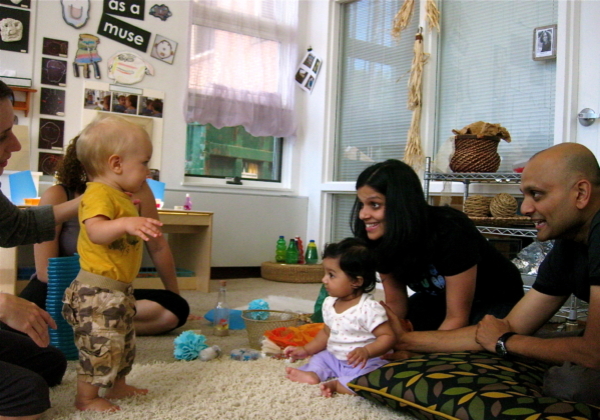
Early relational health, or the dynamic process of mutual, meaningful, and affirming moments of connection in the youngest relationships, is foundational in shaping lifelong physical, behavioral, and mental health. These early relational experiences, expressed through varied cultural pathways, serve as a key ingredient of early learning and well-being. They shape brain architecture; regulate stress physiology; and scaffold emotional, behavioral, cognitive, and physical development. Importantly, the development of early relational health cannot be separated from the broader health of families and communities. Though poor early relational health does not exclude the possibility for health, well-being, and flourishing across the lifespan, early relational health plays a powerful role in promoting lifelong well-being.
In response to a request from the Centers for Disease Control and Prevention, and with funding from Trust for Learning and the CDC, the National Academies of Sciences, Engineering, and Medicine convened in 2025 a committee of experts in child development, pediatrics, infant and early childhood mental health, child and family policy, neuroscience, psychology, parenting, and cultural research.
This committee was asked to review the early relational health drivers of future health and well-being for infants, children, and families, focusing on future directions for research, policy, and practice to advance early relational health across health care, early care and education, and other community settings. The report provides actionable guidance for advancing early relational health. It highlights strategies for strengthening family and community leadership, embedding asset-based practices across systems, supporting the workforce, and fostering collaboration across health care, education, and social services.
The report is organized into the following sections:
Access full report here.
Source: National Academies of Sciences, Engineering, and Medicine. 2025. Early Relational Health: Building Foundations for Child, Family, and Community Well-Being. Washington, DC: The National Academies Press. https://doi.org/10.17226/12401.
Trust for Learning regularly shares new funding opportunities, resources, and research with the field. Please join our newsletter to stay in the loop!